
Fed Rate Cuts: What Is the Bond Market Signaling to Investors?

K. Brad Tedrick, CFA®, CFP®
Fed Chair Jerome Powell’s recent speech at the Fed’s annual Jackson Hole conference, which has been covered extensively in the media, reinforced that an interest rate cut in September is likely. Powell emphasized that while there is uncertainty around tariffs and inflation, these concerns need to be balanced against supporting the job market. Markets have hovered near all-time highs recently, suggesting that investors agree with the trajectory of Fed policy and have confidence in the economy. What does a potential rate cut mean for long-term investors given the overall outlook?
Why market confidence in the Fed matters
 |
The relationship between Fed credibility and market confidence is often overlooked, but it’s crucial for how monetary policy actually works. Financial markets often serve as a “reality check” for the central bank. While the Fed sets short-term rates, longer-term interest rates that affect mortgages and corporate borrowing are determined by markets. This means Fed policy only works when investors have confidence in the Fed’s ability to achieve its goals through both rate setting and guidance.
The 1970s serve as an example of a time when low confidence in the Fed drove rates up. When the Fed lost credibility by allowing prices to surge, bond market investors effectively increased interest rates anyway by demanding higher yields to offset inflation risk. In contrast, the post-2008 period demonstrated how Fed credibility helped keep long-term inflation expectations stable. Even when the Fed was arguably slow to react to inflation after the pandemic, their rapid rate hikes and strong statements helped to restore inflation expectations.
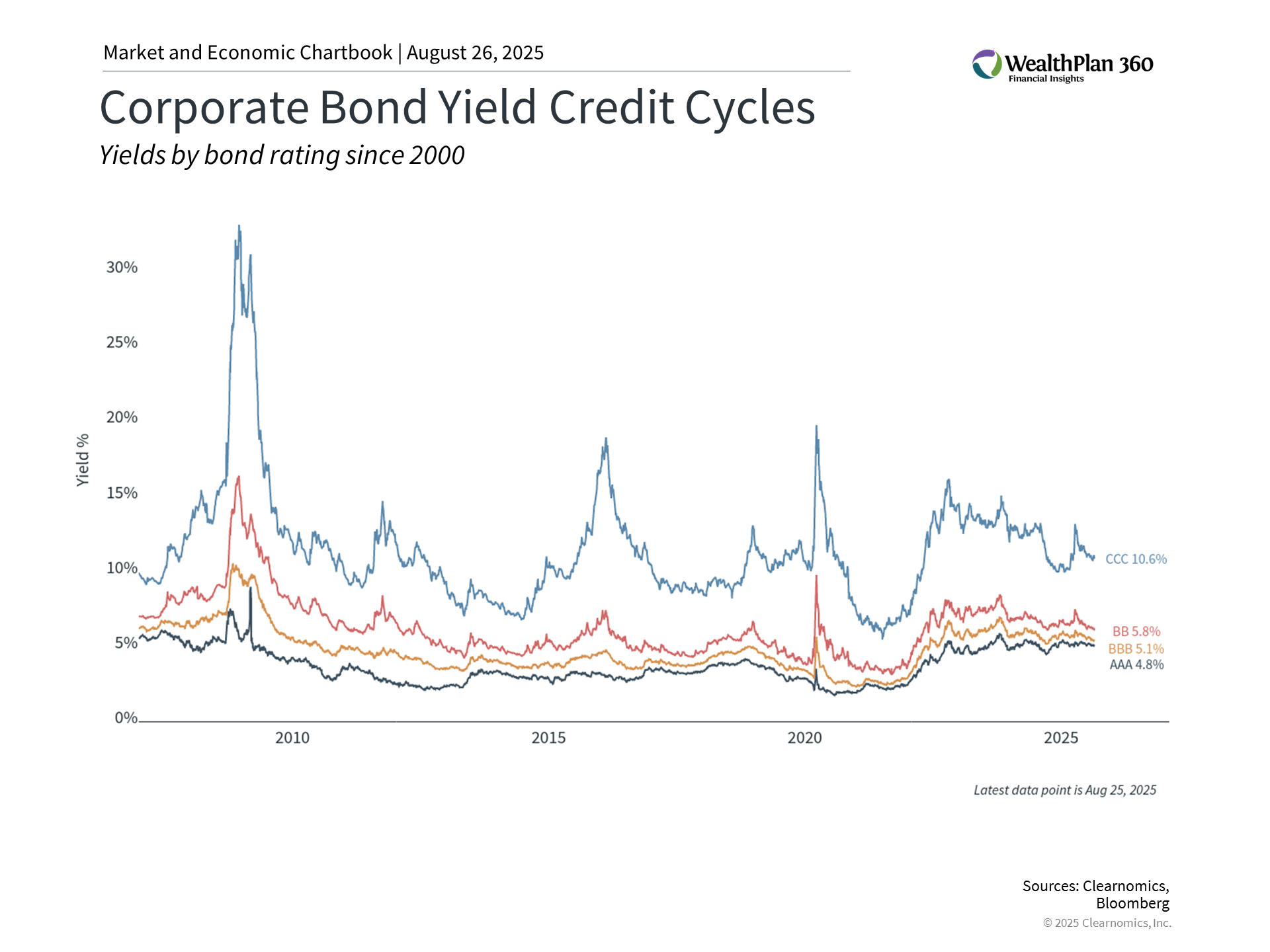
One way to measure confidence in both the Fed and the economy is with corporate bond yields. Yields represent the compensation investors require to lend to companies based on risk. These yields generally fall when the economy is healthy and corporate profits are growing, and widen in response to financial and economic concerns. Similarly, corporate credit spreads show us how much yield investors require above safe government bonds.
Today’s market environment suggests this confidence remains strong. One of the clearest signals of market confidence comes from corporate bond markets, where credit yields and spreads have reached their lowest levels in years, as shown in the chart above. High-yield spreads have similarly tightened, indicating that investors are comfortable taking on corporate credit risk. This is consistent with major stock market indices reaching new all-time highs due to investor confidence.
The Fed is signaling rate cuts
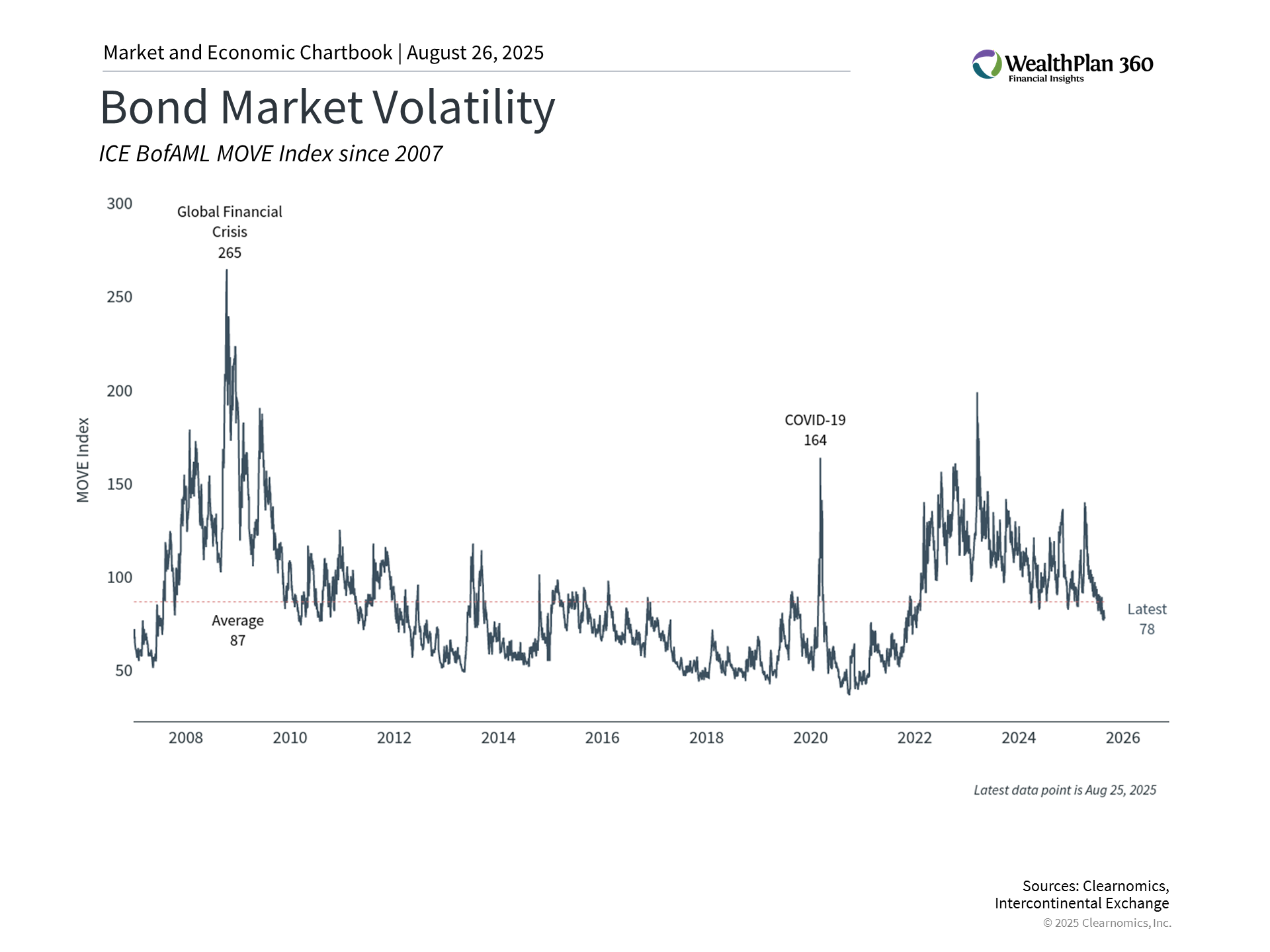 |
Powell’s Jackson Hole speech acknowledged the delicate balance the Fed must strike between controlling inflation and supporting employment. While the Fed chair noted that “risks to inflation are tilted to the upside” due to tariff impacts, he also emphasized “significant risks to employment to the downside.” This dual focus reflects the Fed’s mandate to promote both stable inflation and employment.
Recent economic data illustrates this challenge. The Fed’s preferred inflation measure, the Personal Consumption Expenditures Price Index, has risen 2.6% over the past year, while core PCE increased 2.8%. These levels remain above the Fed’s 2% target, and along with the Consumer Price Index and Producer Price Index, show signs that companies are beginning to pass on higher costs to consumers.
However, employment data has shown unexpected softening. July’s jobs report revealed that only 73,000 new positions were added, well below the historic average and what economists had expected. Downward revisions to previous months suggested that the job market has been cooling more than initially believed. Unemployment has remained steady between 4.0% and 4.2%, but this stability partly reflects reduced labor force participation and changes in immigration policy affecting labor supply.
The Fed’s challenge is determining whether tariff-related price increases represent a temporary adjustment or are a sign of worsening inflationary pressures. So, at the moment, the Fed appears to be positioning for cautious rate cuts.
Rate cuts create opportunities across bond sectors
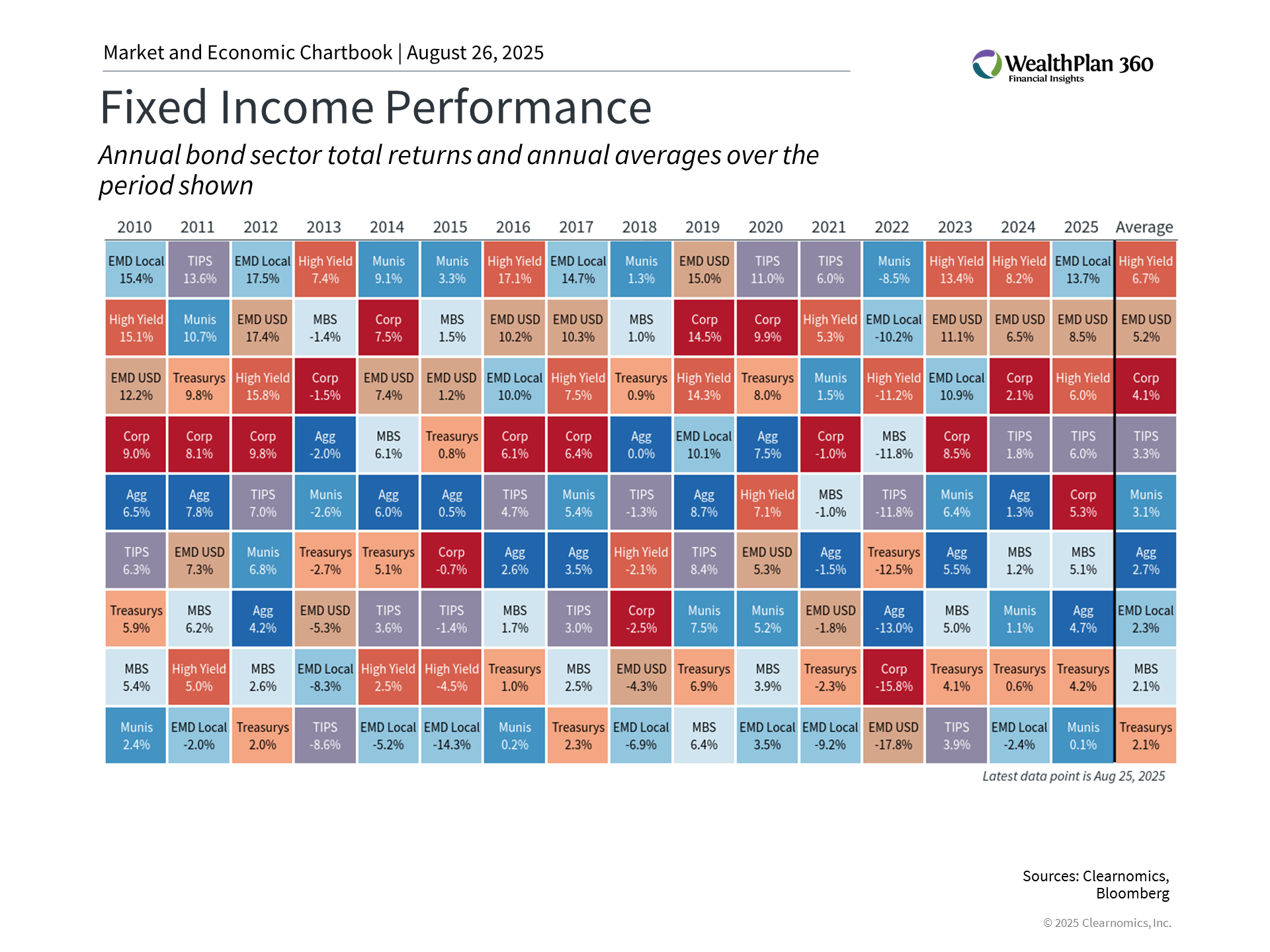 |
The prospect of Fed rate cuts has important implications for all investors. Historically, falling policy rates provide support for bond prices, since existing bonds with higher yields become more valuable. In addition, changing rates and market volatility have helped support diversified bond holdings. All of these factors have helped the U.S. Aggregate Bond Index to generate a total return of 4.8% this year.
Whether long-term rates come down or not, bond yields are quite attractive. For instance, the average yield for Treasurys is currently 4.0%, 4.9% for investment grade corporate bonds, and 6.9% for high yield debt. To help investors generate portfolio income, these yields are still far higher than the average levels since 2008.
For stock investors, lower rates typically reduce borrowing costs for companies, which can increase growth rates. This can support higher valuations since future cash flows can be worth more today when interest rates are lower. The market’s recent all-time highs suggest investors are already positioning for this supportive environment.
Of course, when credit spreads are tight and market valuations are high, it’s important to remain disciplined. When spreads are compressed, corporate bonds may offer limited additional return potential and could face challenges if conditions deteriorate. Similarly, high valuations can also mean that long-run expected returns may be lower
This doesn’t mean avoiding stocks or bonds entirely, or trying to time the market, but instead highlights the importance of holding an appropriate asset allocation to balance these risks. A well-constructed portfolio can benefit from a stable economic environment and expected rate cuts, while maintaining protection against unexpected developments.
The bottom line? Market confidence in Fed policy direction, combined with strong corporate fundamentals, creates opportunities for long-term investors. Holding an appropriate portfolio is still the best way to navigate long run risk and returns.


