
How Investors Can Keep Up with Inflation

K. Brad Tedrick, CFA®, CFP®
When it comes to natural disasters, it’s important to be prepared for earthquakes and erosion alike. Even though one is immediate and dramatic while the other is slow and gradual, both require careful planning and protective measures. Economic forces are no different – the most challenging situations that households and businesses face aren’t always sudden and obvious, but can play out over many years. In the case of inflation, the risk of both sharp price increases and the gradual erosion of purchasing power are affecting financial markets today.
For investors who lived through the inflation of the 1970s and early 1980s, or the price surges that followed the pandemic, this pattern should feel familiar. On the one hand, inflation is more stubborn than many would like, and there are continuing concerns that tariffs will raise consumer prices. On the other hand, today’s inflation is occurring alongside healthy employment, consumer spending, and corporate profits. This creates a complex environment for both investors and policymakers as they balance growth and inflation.
Rather than waiting for inflation to become a problem, long-term investors should build portfolios that can handle many scenarios while staying focused on their financial goals. What do recent inflation reports tell us about the economy and investing?
Inflation erodes purchasing power over time
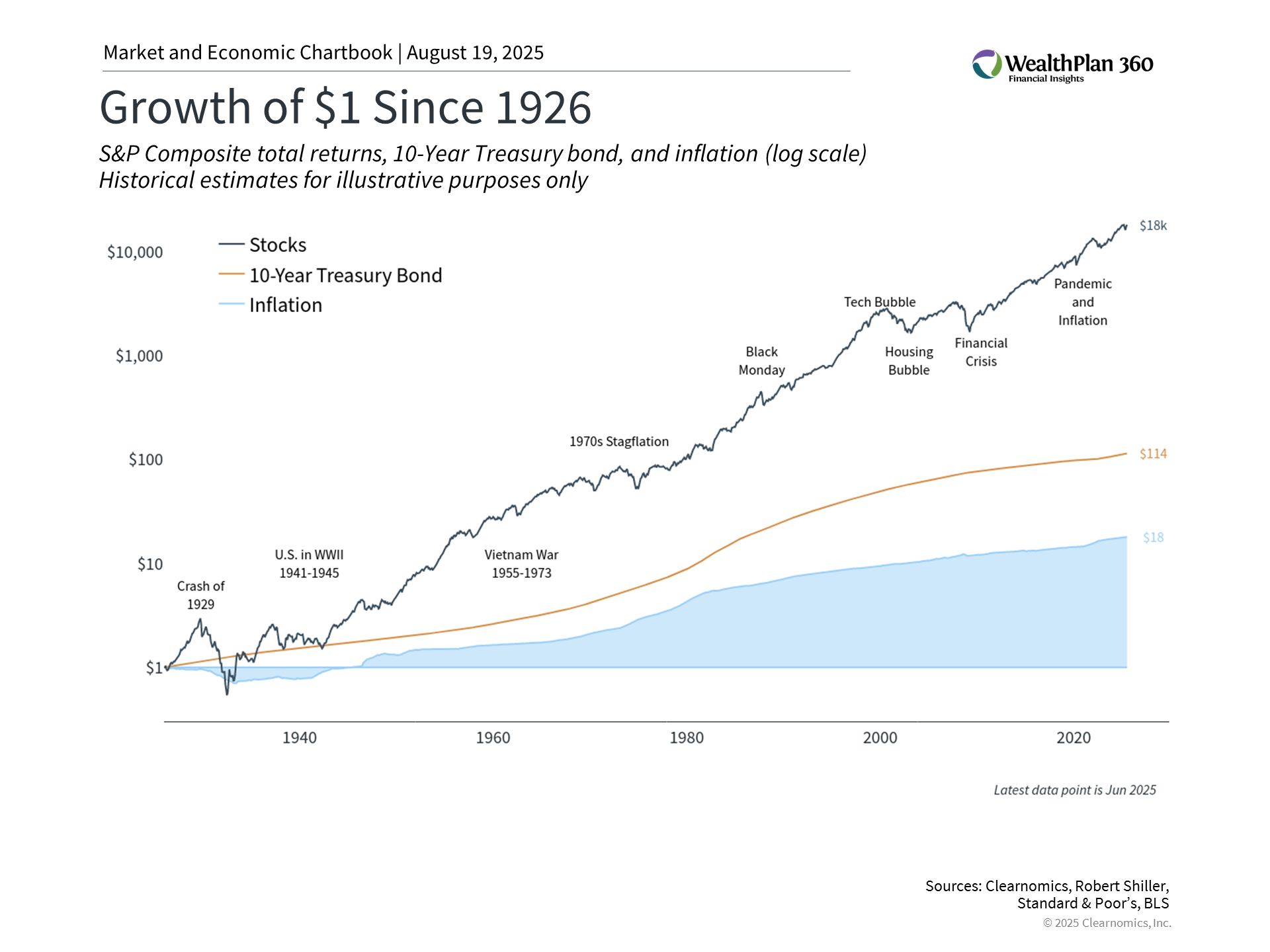 |
Most investors, savers, and retirees understand that overcoming inflation is one of the key purposes of investing. Maintaining the purchasing power of a portfolio or cash in a bank account, whether through stocks, bonds, certificates of deposit, or other investments, is critical to ensuring you can afford a comfortable lifestyle in the future. The chart above highlights this fact. What cost $1 a century ago now costs $18. It’s also clear that these price pressures accelerated in the 1970s, and again more recently.
From this perspective, it may seem as if an inflation rate of zero – or even deflation where prices fall over time – may be helpful. However, inflation is not just about what we all pay for goods and services, it’s also about the health of the broader economy. Modern economic theory is built on the idea that a low but positive inflation rate, usually around 2%, creates the best balance for individuals and the overall economy.
A moderate inflation rate provides central banks with room to implement monetary policy, incentivizing spending and investment when appropriate. Additionally, some inflation helps prevent the economy from falling into deflationary spirals, a situation in which falling prices lead consumers to delay purchases since they expect lower prices in the future.
So, it’s important to distinguish between the micro- and macro-economic perspectives. While inflation of 2-3% may have historically supported a healthy growth environment, even this moderate level of inflation can be harmful to savers. These rates may seem manageable compared to the double-digit inflation of the 1970s or the recent post-pandemic surge, however they still compound and build up over time.
For example, at just 3% annual inflation, the cost of goods doubles roughly every 24 years. This means that $100,000 in today’s purchasing power would require $200,000 in two decades – within the span of the average retirement period. This erosion is particularly challenging for retirees and savers holding cash. For all investors, inflation creates a “hurdle rate” that their investment returns need to exceed in order to grow their wealth.
Inflation continues to be sticky
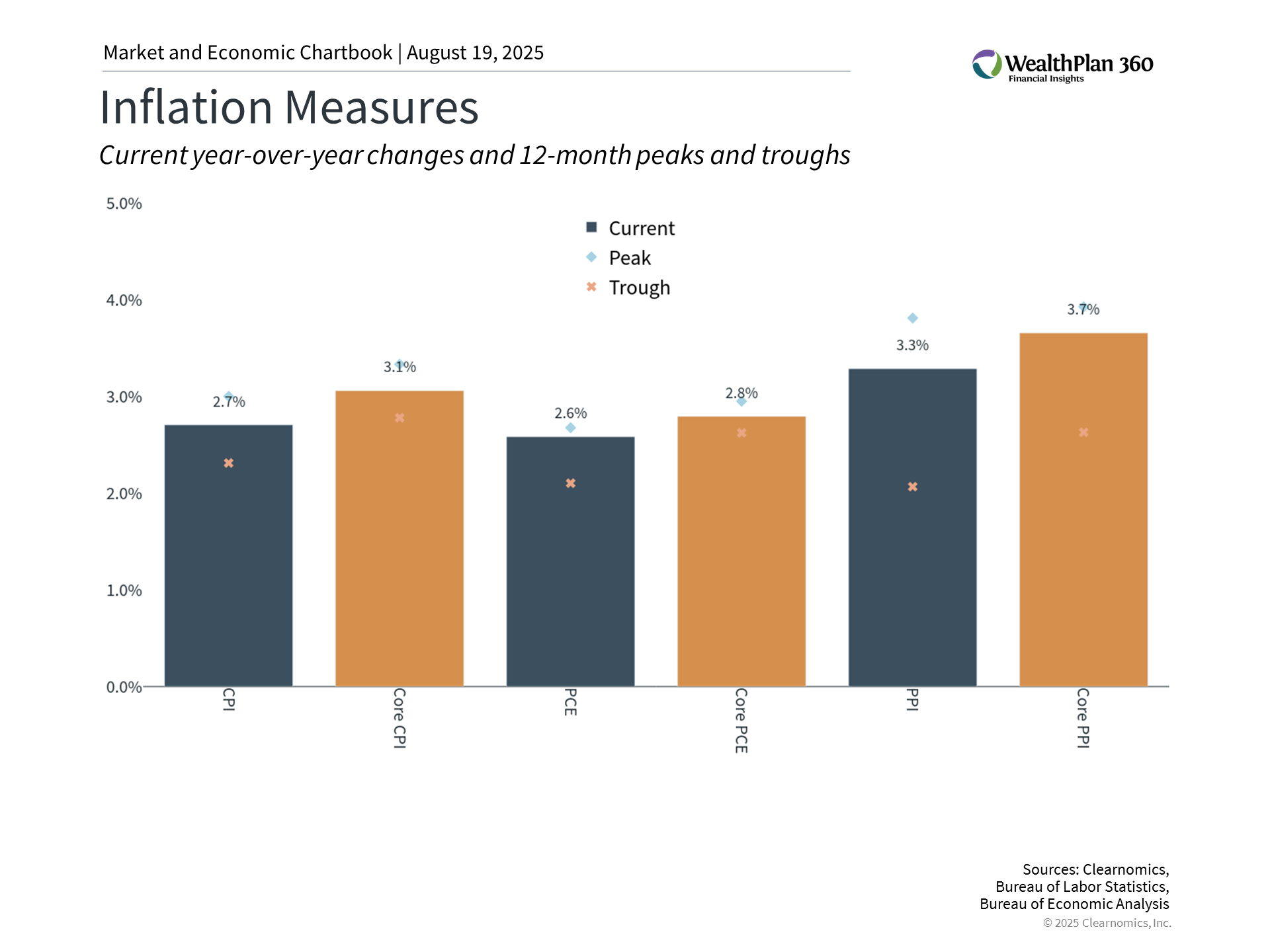 |
When it comes to today’s inflationary environment, many have been worried about the “earthquake” effect that tariffs may have on inflation. The latest Producer Price Index report, for instance, shows that the prices charged by businesses jumped in July. Wholesale prices surged 0.9%, the largest monthly increase since June 2022, and far above what economists had expected. The prices of goods rose 0.7% over the period, while services jumped 1.1% in just a single month.1
These numbers matter because increases in wholesale prices often show up in consumer prices with a lag of several months, as inflation makes its way through the supply chain. This is consistent with companies absorbing some of the costs of tariffs up to this point but potentially beginning to pass higher prices on to customers.
The latest Consumer Price Index report shows a less dramatic increase in prices, but still confirms that inflation is stickier than many would like. These recent figures show that prices rose 2.7% over the past year for headline inflation, or 3.1% when excluding food and energy prices which have been flat or negative. Much of this was due to increases in shelter costs (i.e., the cost of housing).2
Again, while these numbers help us understand the economy in an abstract way, they also directly impact the budgets of everyday households. The price increases are appearing where consumers feel them most: restaurant meals rose 3.9% over the past year, medical care 3.5%, and car insurance jumped 5.3%. Even household items like furniture have risen 3.4%, adding pressure to family budgets that have already been stretched by years of higher prices.
Keeping up with inflation requires careful asset allocation
 |
While these increases are notable, inflation is still well below the double-digit rates experienced from 2021 to 2022. However, even if tariffs do not cause sudden jumps in inflation, they may raise the average level of prices over time, eroding the value of cash. This is especially true if wage gains don’t keep up with price increases, and if investors do not have long-term asset allocations that can exceed inflation rates.
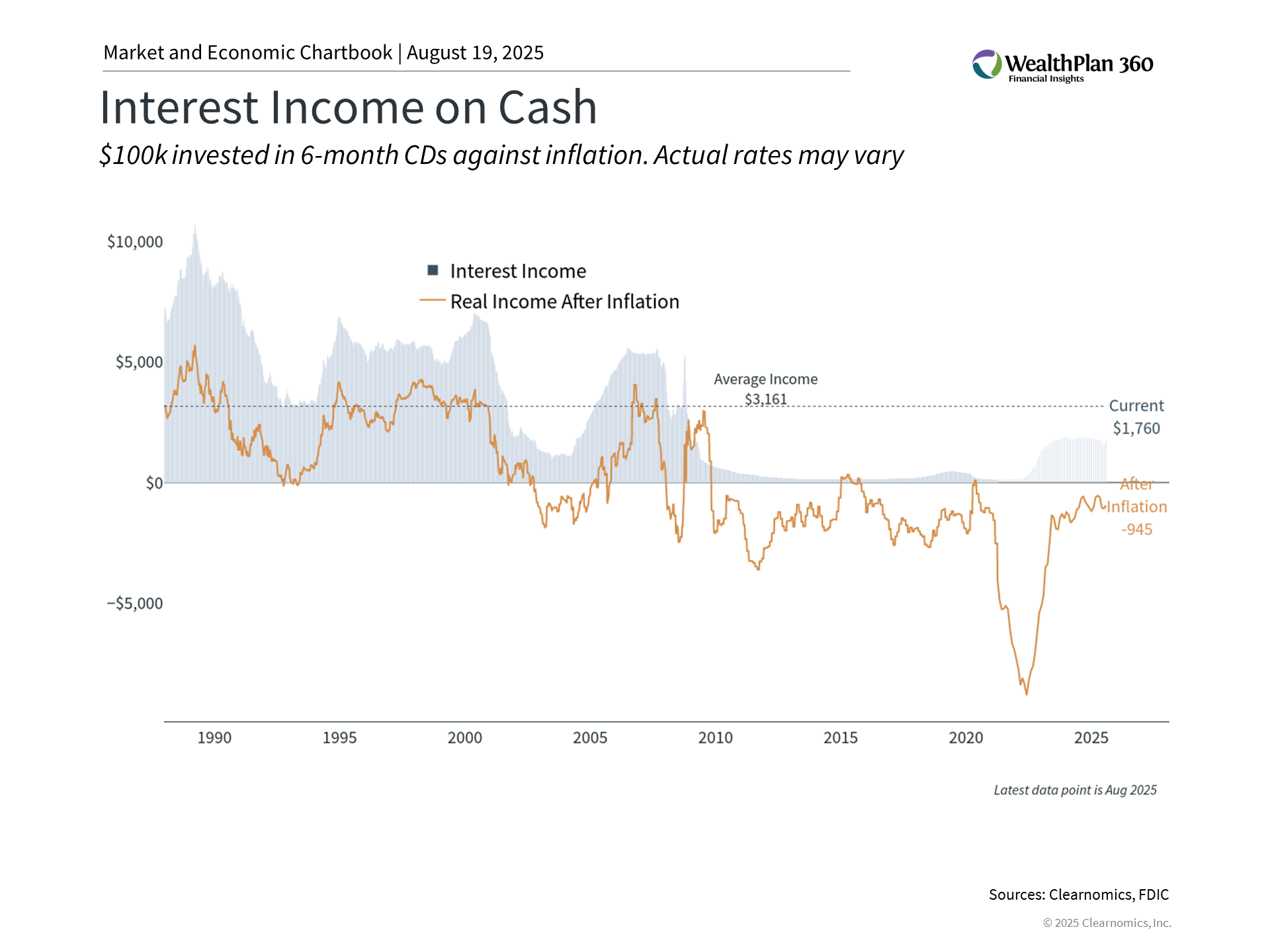
So, it’s important to keep in mind what inflation means for portfolios. The chart above shows that the average level of interest earned on cash hasn’t kept up with inflation. In addition, the amount held in money market funds is still at all-time highs of $7.1 trillion, even as short-term interest rates have declined.3
While the past is no guarantee of the future, history shows that both stocks and bonds have outpaced inflation over long periods, as depicted in the first chart above. However, stocks can be volatile during inflationary periods, as demonstrated in 2022. This is why a balance of asset classes that can withstand both inflation and periods of volatility can help investors stay on track.
Perhaps most importantly, investors should resist the urge to make dramatic portfolio changes based on monthly inflation readings or concerns over tariffs. While it’s crucial to ensure portfolios are positioned for different scenarios, overreacting to short-term data often leads to poor timing decisions that can derail long-term financial goals.
The bottom line? Inflation’s gradual erosion of purchasing power is a key investment challenge. Holding an appropriate portfolio that can generate income and growth is the best way to pursue financial goals.


